
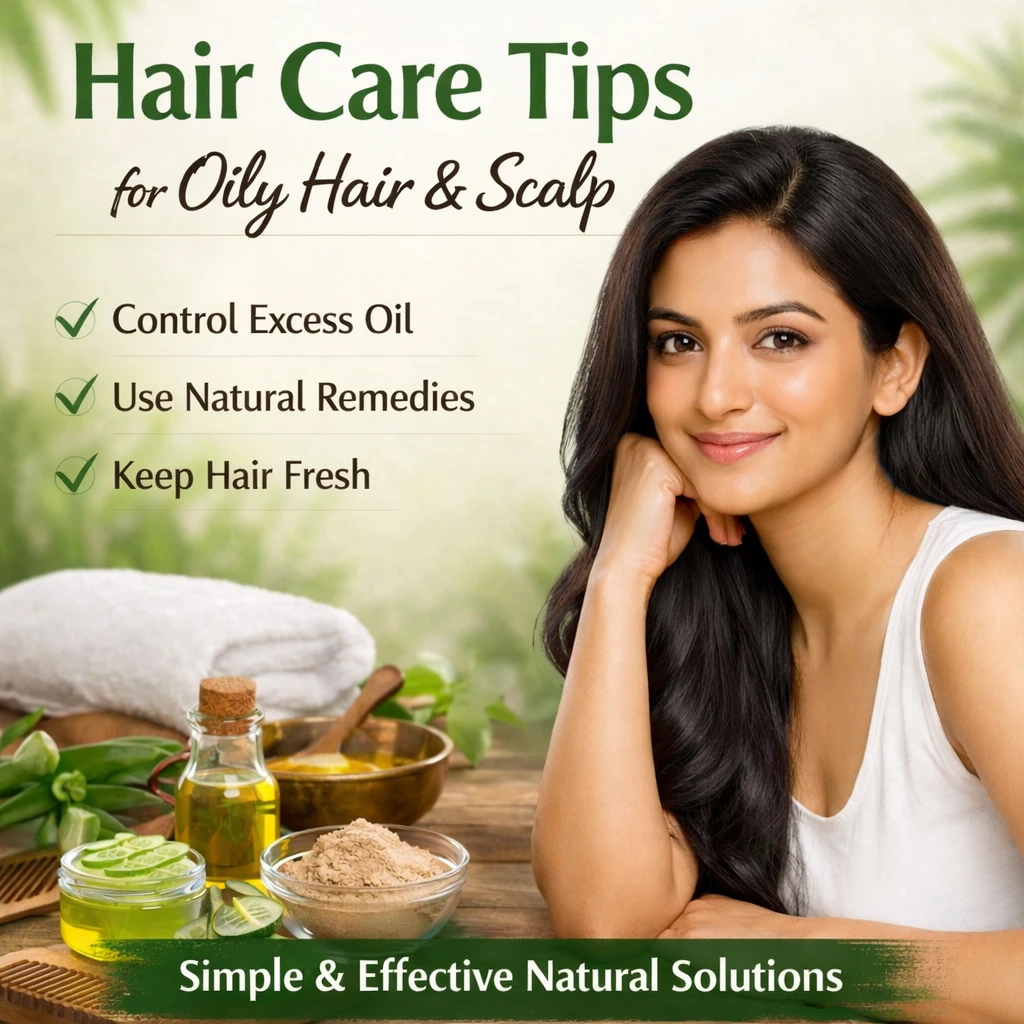
Hair care tips play a very important role when you have an oily scalp and greasy hair. In the Indian climate, heat, humidity, sweat, and pollution often trigger excess oil production, making hair look flat and unclean within a day. Many people try harsh shampoos or wash hair daily, but these habits can worsen the problem instead of fixing it.
The right approach focuses on balance, not stripping the scalp of its natural oils. Simple, natural care routines can help manage oil levels while keeping hair healthy and strong. At Arurunaturals, we believe that understanding your scalp type and following gentle, nature-based practices can support long-term hair health. This guide shares practical, easy-to-follow natural tips suitable for oily hair and scalp, especially for Indian conditions.
Understanding Oily Hair and Scalp
An oily scalp produces excess sebum, a natural oil meant to protect hair and skin. When sebum production increases, hair becomes greasy quickly.
Common reasons for oily scalp include:
- Hot and humid weather
- Frequent shampooing
- Using heavy hair oils or conditioners
- Hormonal changes
- Dirt and pollution buildup
Understanding the cause helps you choose better daily habits instead of temporary fixes.
Hair Care Tips for Oily Hair and Scalp
Choose a Gentle, Lightweight Shampoo
Use a mild shampoo that cleans the scalp without drying it out. Strong cleansers can trigger more oil production as the scalp tries to compensate.
Look for shampoos with:
- Herbal or plant-based extracts
- Sulphate-free formulas
- Lightweight cleansing agents
Try spacing your hair washes evenly through the week instead of cleansing your scalp every single day.
Avoid Applying Oil Directly on the Scalp
Oiling is a common habit, but oily scalps don’t need heavy oiling. Applying oil directly can clog pores and attract more dirt.
Better approach:
- Apply oil only to hair lengths if needed
- Use very small quantities
- Wash it off within a few hours
This keeps hair nourished without making the scalp greasy.
Rinse Hair Thoroughly After Washing
Leftover shampoo or conditioner residue can make hair look oily faster. Always rinse with plenty of water, especially near the roots.
A clean rinse helps:
- Reduce buildup
- Keep hair lighter
- Maintain scalp freshness
Natural Ingredients That Help Control Oil
Multani Mitti (Fuller’s Earth)
Multani mitti absorbs excess oil and cleanses the scalp gently.
How to use:
- Mix with plain water
- Apply to scalp and roots
- Rinse after 15 minutes
Use once every 10–15 days.
Fresh Aloe-Based Scalp Care
Aloe-based natural preparations help soothe the scalp and balance oil without heaviness.
Benefits include:
- Cooling effect
- Reduced scalp irritation
- Lightweight hydration
This is especially useful during summer months.
Daily Habits That Reduce Greasiness
Avoid Touching Hair Frequently
Touching hair transfers oil from hands to strands, making it greasy faster.
Clean Combs and Pillow Covers Regularly
Dirty hair tools and pillow covers reintroduce oil and dirt back into clean hair.
Limit Heat Styling
Excess heat increases sweat and oil production on the scalp. Let hair air-dry whenever possible.
What to Avoid If You Have Oily Hair
- Heavy conditioners near the roots
- Thick styling creams or waxes
- Daily shampooing
- Very hot water for washing
Avoiding these helps maintain natural oil balance.
Diet and Lifestyle Support for Healthy Scalp
Healthy hair starts from within. A balanced diet supports scalp health naturally.
Helpful habits include:
- Drinking enough water
- Eating fresh fruits and vegetables
- Reducing fried and overly spicy foods
- Managing stress levels
Simple lifestyle changes support long-term scalp balance.
Conclusion
Managing oily hair doesn’t require harsh products or complicated routines. With the right hair care tips, gentle cleansing, mindful habits, and natural ingredients, you can keep your scalp fresh and hair healthy. Consistency matters more than quick fixes.
At Arurunaturals, we believe that simple, natural care routines work best when followed regularly and patiently. By understanding your scalp and making small, thoughtful changes, you can maintain balanced, healthy hair in the long run.